
This content is no longer available
Newsedge Global Media
Eight JCPS schools were identified in a national study as candidates for closure due to decreased enrollment and low academic achievement.
Five years ago,
Of its students, 13% were reading proficient and 14% were math proficient, according to last year's test scores. Meanwhile, the school requires more than
It's for those reasons that the school, along with seven others within
The study, published in September by the
But there's more to closing a school than simply shuttering a building. And the move isn't on the radar of JCPS leaders — especially as some of the schools identified in the study start to show improvements.
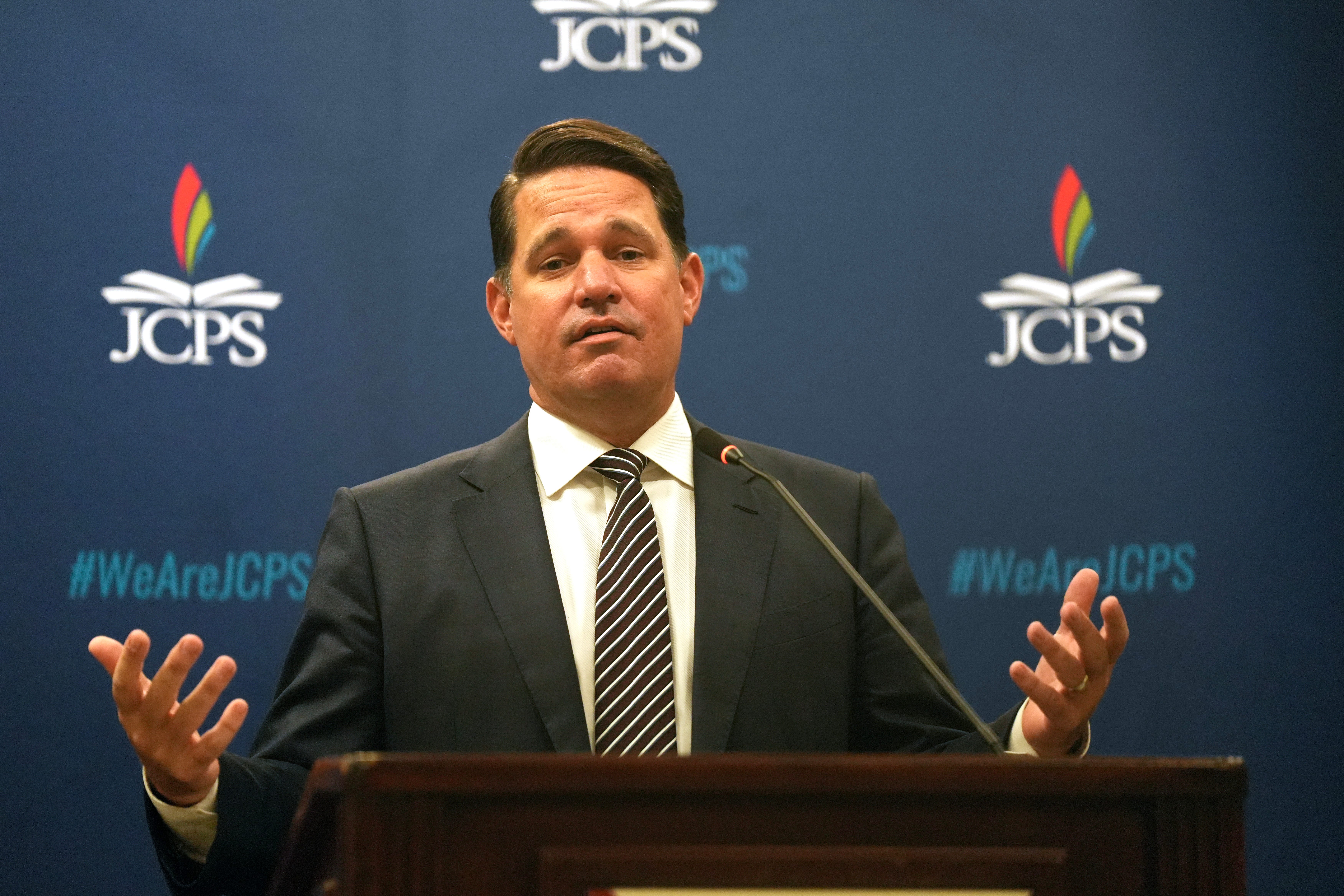
"There hasn’t really been any official ongoing process on whether or not we keep or close a school," Superintendent
What can lead to a school's closure?
JCPS has only closed a few schools in the past several decades, with the largest change coming in 2019, when the district consolidated six elementary schools into three.
The funding each school receives is based on its number of students, along with their classified needs, though many costs associated with running a school are the same regardless of its enrollment. Because of this, Pollio said, it is not cost efficient to have elementary schools with fewer than 250 students.
Of the schools identified in the study,
Before the pandemic, Young served about 340 students. By fall 2022, it had 209. Now, it has just 100.
Such a drop has driven up the school's per pupil spending drastically. While JCPS' average expenditure was just over
Unlike other schools in the study, though, Young students are improving their rates of academic achievement.
Schools the study identified as candidates for closure had each received the state's "Comprehensive Support and Improvement" designation in recent years, meaning they fell within the bottom 5% of all
The authors of the study took issue with how some states — including
"Frankly, we’re not fans of how some states designate their CSI schools, relying heavily on proficiency rates rather than year-over-year student-level growth," the study stated. "There might be some schools on the list with very low test scores but strong year-to-year growth. We would consider those good schools, not bad schools."
Young was first labeled a CSI school in 2019-20, but student performance increased enough to move it out of that designation in 2022-23. Test scores show 19% of students were reading proficient last year — the second highest rate among the eight schools identified in the study. As a district, 22% of students were proficient readers.
How one school has improved its annual test scores

Though the study identified
In the fall before the pandemic, the school enrolled 425 students. But by the 2022-23 school year, it had just 266.
This year, however, the school's enrollment is back up to 405 students, a jump Principal
Part of what makes the school attractive to families — more so than other
Like Young, the school earned the CSI designation in 2019-20 but it was able to drop the designation in 2022-23.
Of its students, 26% were proficient readers and 21% were proficient in math — the highest rates of all schools on the study's list and on par with the district's averages, according to the latest test results.
Being labeled CSI provided the school with a lot of resources that has allowed it to improve, Whitis said, explaining that with support from the district, the school's staff has "gained a lot of really good insight around continuous improvement."

Rather than monitor student scores on a year-to-year basis, like all schools are required, Whitis and his team are doing this on a 45-day cycle, which includes looking at academic, behavior and attendance data.
"How did our last 45 days go?" Whitis said the team asks each cycle. "What was working well? What do we need to focus on in the next 45 days?"
Having those discussions, he said, allows administrators to provide teachers with real-time feedback and targeted professional development to make the adjustments needed sooner rather than later.
"This really gave me a concrete way to make sure it was systematic rather than hoping something happens," Whitis said of achieving academic growth.
The school's progress, he said, is why it should stay open.
"I think that with the (enrollment) growth we have shown over the past few years and the student outcomes that we are starting to see, (it) shows that we play a vital role in our community," Whitis said.
Why closing a school is difficult
Nationally, superintendents are talking about "right-sizing" schools more frequently, Pollio said, in order to combat teacher vacancies, deal with funding shortfalls and provide students more wraparound services.
"It's something we have to take a look at," Pollio said, before adding that closing a school is very difficult, and its not something he intends to address before his retirement in July.
Closures usually only come when a district is facing a financial crisis — like
Closing a school requires examining how its absence would impact other nearby schools, as well as the building's infrastructure and the county's expected population shifts. Most importantly, however, it requires considering the impact on students, Pollio explained.
"Every kid is important," Pollio said. "The hardest part is when you have kids in a school, you have families in a school and if families love that school, saying your school is closed is not an easy thing to say. These conversations need to happen methodically and with the community about what's best for kids and not just what's best for the bottom dollar of the district."
The goal of the study, despite labeling schools as "candidates for closure," isn't to persuade districts to close all of those schools, nor to imply all of them are "bad schools," the study's author
While districts across the country have seen a decline in enrollment in the wake of the pandemic, Goulas said his study showed declines were more prevalent in lower performing schools. This, he said, gives districts an opportunity: Improve test scores in order to draw families back in — which at least Breckinridge-
"My hope is that this report will serve as a wake up call for districts," Goulas said. "There are things they can do."
This article originally appeared on
© Copyright 2024, GANNETT